
Introduction
Office lunch catering has evolved from a basic necessity into a strategic tool for workplace success. In Melbourne's competitive corporate environment, the decision to invest in quality office lunch catering directly impacts employee morale, productivity, team cohesion, and overall workplace satisfaction. Whether you're planning a regular Tuesday team lunch, celebrating a milestone achievement, conducting important client meetings, or hosting an all-day corporate event, the quality and thoughtfulness of your lunch catering sends a powerful message about how much you value your team.
The challenge facing Melbourne business leaders is clear: how do you select office lunch catering that satisfies diverse tastes, accommodates multiple dietary requirements, fits within budget constraints, and actually enhances rather than detracts from your event? This comprehensive guide walks you through every aspect of office lunch catering in Melbourne, helping you make informed decisions that result in positive experiences for your team and meaningful business outcomes.
Why Office Lunch Catering Matters More Than You Think
Many business leaders view office lunch catering as a checkbox item—something you arrange because it's expected rather than because you understand its strategic value. This perspective underestimates the significant role that food and shared meals play in workplace culture and productivity.
The Connection Between Food and Productivity
The science is clear: employee productivity fluctuates dramatically based on nutrition and energy levels. Without proper sustenance, employees experience the characteristic afternoon energy crash that leads to decreased focus, slower work pace, and reduced quality output. Providing quality office lunch catering prevents this crash and maintains consistent productivity throughout the afternoon.
Beyond the physiological benefits, the act of sharing lunch creates natural breaks in the workday that provide mental reset opportunities. Employees return to their tasks with renewed focus and reduced stress. Research on workplace wellness consistently shows that organizations providing regular, quality meals for their teams see measurable improvements in employee engagement scores, reduced turnover, and stronger team cohesion.
Building Team Culture and Connection
Office lunch catering creates informal gathering spaces where colleagues interact outside their typical professional roles. During these shared meals, informal conversations happen that strengthen relationships, facilitate cross-team collaboration, and build the social bonds that make workplaces feel less like transactional environments and more like communities.
New employees integrate more quickly when included in regular team lunches. Long-standing teams deepen their connections. Clients being entertained at lunch meetings form stronger relationships with your organization. These social benefits compound over time into measurable business value through improved retention, collaboration, and client satisfaction.
Demonstrating Organizational Values
The quality and thoughtfulness of your office lunch catering communicates organizational values more clearly than mission statements ever could. When you invest in fresh, quality ingredients from dedicated catering professionals, you demonstrate that you value employee wellbeing. When you accommodate diverse dietary requirements without making it awkward, you communicate inclusivity. When you choose locally sourced options or sustainable serving practices, you signal environmental responsibility.
Conversely, penny-pinching on catering, serving stale food, or failing to accommodate dietary needs sends equally clear messages about organizational values—and not positive ones. In competitive talent markets, these signals matter when employees and potential hires evaluate whether they want to commit their careers to your organization.
Understanding Different Office Lunch Catering Styles
Office lunch catering comes in multiple service formats, each appropriate for different event types, group sizes, and business objectives. Understanding these options helps you select the style that best serves your specific needs.
Platter and Grazing Catering
Platter and grazing catering represents the most flexible and increasingly popular approach to office lunch. Platters allow guests to help themselves to whatever appeals to them, creating an inclusive experience where everyone finds something they enjoy. This format works exceptionally well for meetings where people eat at different times, for events lasting several hours, and for groups with diverse dietary preferences.
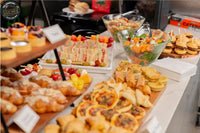
A typical platter approach might include sandwich platters, salad platters, fresh fruit arrangements, protein options, and cheese and crackers boards. The visual appeal of well-arranged platters makes them work beautifully for client entertainment or company celebrations. From a practical standpoint, platter catering requires less service infrastructure than plated meals and accommodates flexible guest numbers more easily than buffet services.
The beauty of platter catering is the informality it creates. Guests graze throughout an event, standing and mingling rather than sitting at designated tables. This encourages networking, informal conversation, and the kind of spontaneous connection that formal seated lunches sometimes inhibit.
Boxed and Grab-and-Go Lunch
For time-pressed teams or events where people need to continue working during lunch, boxed and grab-and-go options provide convenient solutions. Individual lunch boxes include everything needed for a complete meal—sandwich or main protein, salad, fruit, and beverage—all neatly packaged for easy consumption at individual desks or portable locations.
This format works particularly well for intensive workshop days, training sessions, or client site meetings where attendees can't leave their current location. Grab-and-go catering also accommodates teams spread across multiple office locations, as each person receives their own complete meal rather than relying on shared serving infrastructure.
The sophistication of boxed lunch options has increased dramatically. No longer limited to sad sandwiches and plastic containers, modern boxed lunches feature quality ingredients, thoughtful flavour combinations, and attractive presentation that signal professionalism and care.
Buffet Service
Full buffet service suits larger events, particularly celebrations or formal corporate lunches. Buffet-style service allows guests to see the full range of options available, select quantities that match their appetites, and choose combinations that appeal to their individual preferences.
Buffet catering requires more serving infrastructure than platter options—serving tables, utensils, plates, napkins—but provides a more formal dining experience appropriate for client entertainment or milestone celebrations. The disadvantage is that buffet service can create bottlenecks at serving stations and, if not well managed, can result in uneven distribution of items as early guests take disproportionate portions.
Seated Plated Meals
For the most formal occasions—executive lunches, major client entertainment, board meetings—seated plated meals provide the premium experience. Professional catering staff serve pre-plated meals to seated guests in a coordinated fashion, creating an elegant, formal atmosphere appropriate for important business occasions.
Plated meal service requires advance menu planning and fixed guest counts, making it less flexible than platter or buffet options. However, the sophistication and control this format provides makes it ideal when you're entertaining important clients or celebrating significant company milestones.
Building the Ideal Office Lunch Menu
Creating an office lunch menu that satisfies diverse preferences while working within practical constraints requires thoughtful planning. The best office lunch menus balance variety, freshness, health consciousness, and flavor while ensuring that everyone finds something they genuinely enjoy.
The Core Menu Components
Every successful office lunch includes several essential components that work together to create a satisfying meal. Protein options form the foundation—whether sandwiches, salads with protein additions, wraps, or hot dishes. Quality protein sustained energy and satisfaction, which is exactly what you want your afternoon workday to include.
Carbohydrate elements might be fresh bread accompanying sandwiches, grains in salads, or rice or pasta in hot dishes. Healthy carbohydrates provide sustained energy without the crash associated with refined options. Including whole grain bread in sandwich offerings signals that you're thinking about employee health, not just filling stomachs.
Vegetables and fresh produce add nutritional value, visual appeal, and palatability. A lunch that looks vibrant and includes clearly visible fresh produce feels healthier and more thoughtfully planned than one that appears heavy or overly processed. Fresh salads with diverse vegetables, colorful vegetable trays with dips, and fruit platters all contribute to the overall health perception of your catering.
Healthy fats from quality sources—olive oil dressings, avocado, nuts, seeds—make meals more satisfying and support cognitive function. This is particularly important since you want afternoon productivity, not afternoon energy crashes.
The Vegetarian, Vegan, and Dietary-Specific Imperative
Modern office lunch catering must treat dietary requirements as standard menu components, not special accommodations requiring advance notice and awkward separate servings. Depending on your team composition, you might have vegetarians, vegans, gluten-free requirements, dairy-free needs, and multiple cultural or religious dietary practices all represented.
Rather than viewing this diversity as a catering challenge, treat it as an opportunity to expand your menu in ways that benefit everyone. A well-designed vegetarian sandwich option appeals to vegetarians and flexitarians alike. Gluten-free bread options serve people with celiac disease and others choosing to reduce gluten intake. A salad with multiple protein options (including plant-based proteins) lets everyone build the meal that works for them.
The key principle: build dietary diversity into your standard menu so accommodations feel integrated rather than tacked on. This requires working with catering providers who understand modern dietary preferences and can deliver integrated solutions rather than viewing dietary requirements as complications.
Freshness and Quality Standards
Office lunch catering quality lives or dies based on freshness. Sandwiches made with day-old bread, salads prepared yesterday, or cold cuts that have been sitting under warming lights for hours actively undermine your catering investment. You've spent money, planning time, and organizational goodwill on this meal—don't let it fail on the execution of freshness.
Quality ingredients matter enormously. Fresh, leafy greens in salads. Properly ripened avocado rather than hard, unripe versions. Quality proteins rather than cheap cuts or processed meats. Fresh bread baked that morning rather than previously frozen. These ingredient choices transform catering from adequate to memorable.
The sourcing story adds another dimension. Melbourne's strong food culture and farm-to-table movement make locally sourced options increasingly important to both employees and clients. Knowing that your office lunch includes produce sourced from local Victorian farmers, or proteins from ethical suppliers, creates an additional layer of satisfaction beyond just the eating experience.
Office Lunch Catering for Different Business Occasions
Different workplace events call for different catering approaches. Understanding how to match your catering style to your specific occasion helps ensure the meal enhances rather than detracts from the event's purpose.
Regular Team Lunches and Weekly Gatherings
Regular team lunches—whether every Friday or monthly—create valued rituals that employees anticipate and that strengthen team bonds. These occasions benefit from casual platter or grab-and-go options that let team members help themselves and eat at their preferred pace. The informality creates space for genuine connection and conversation that formal seated meals sometimes inhibit.
Rotating menu options keeps regular team lunches interesting. What works as a Friday special one week might feel stale if served every week for months. Varying between different cuisine styles, incorporating seasonal options, and occasionally introducing new flavor combinations keeps team lunches something people look forward to rather than endure.
All-Day Workshops and Extended Meetings
Events lasting multiple hours present unique catering challenges. Breakfast options at the start set the day's tone. Mid-morning break snacks combat energy dips. A substantial lunch near midday keeps participants engaged through afternoon sessions. Afternoon tea options provide another energy boost before the day concludes.
This tiered approach requires careful planning and coordination. Rather than overwhelming attendees with massive quantities at lunch, spreading food across multiple breaks maintains energy and focus throughout the day. Quality beverages—proper coffee, herbal teas, fresh juices—become increasingly important as the day extends.
For full-day events, integrating breaks around catering actually enhances rather than detracts from productivity. Scheduled breaks give participants time to digest information absorbed in morning sessions, return refreshed for afternoon learning, and prevent the mental fatigue that comes from sustained focus without rest.
Client Lunches and Business Entertainment
Client entertainment lunches carry different stakes than internal team meals. These occasions communicate your organization's sophistication, attention to detail, and respect for the relationship. Premium catering signals that you value the client relationship and have invested thoughtfully in creating a positive experience.
Client lunches typically benefit from higher-end platter presentations, more sophisticated flavour combinations, or seated plated service depending on the formality level appropriate to your industry and relationship. The presentation matters enormously—beautiful platters, quality serving pieces, professional setup all communicate through visual language that this is a valued occasion.
Menu selection for client entertainment should showcase quality and sophistication without requiring extensive explanation or becoming so unusual that clients feel uncomfortable. Gourmet sandwiches with interesting but not intimidating combinations, salads with premium ingredients, fresh fruit presentations, and quality beverages all communicate quality without creating awkwardness.
Celebration Lunches and Milestone Events
Company celebrations—promotions, retirements, anniversaries, major project completions—call for special catering that matches the milestone's significance. These occasions benefit from more substantial offerings than routine lunches, potentially including hot dishes alongside sandwich and salad options.
The emotional component of celebration catering matters as much as the food itself. Personalizing the menu around the celebrated individual or achievement adds meaningful touches that transform catering from functional to memorable. A retirement celebration might feature items representing the retiree's favorite foods. A major project completion celebration might incorporate items reflecting the project's focus.
Celebration occasions are appropriate for premium catering investments. This is not the time to compromise on quality. The occasion's significance justifies higher-end options, premium ingredients, and professional presentation that create lasting positive memories.
Navigating Dietary Requirements and Allergen Considerations
The modern workplace includes colleagues with diverse dietary needs ranging from strict allergies to ethical or religious preferences to health-based choices. Successfully navigating this diversity requires moving beyond viewing dietary requirements as obstacles and instead treating them as fundamental to good catering design.
Common Dietary Requirements in Melbourne Workplaces
Vegetarian and vegan diets have moved from niche to mainstream. Many workplaces now have significant vegetarian populations (typically 10-20% of staff), making vegetarian options standard rather than special requests. Vegan options serve ethical dieters, people with certain religious practices, and those experimenting with plant-based eating for health reasons.
Gluten-free requirements represent another significant category, ranging from celiac disease sufferers with true medical needs to people choosing to reduce gluten consumption. Providing gluten-free bread options for sandwiches and ensuring salad dressings are gluten-free represents basic catering competence in 2026.
Dairy-free and lactose-free requirements overlap but aren't identical. Dairy-free catering serves vegans and people with allergies or intolerances. Providing non-dairy milk options for beverages and ensuring salads don't rely exclusively on cheese-based dressings demonstrates competence and inclusion.
Nut allergies represent potentially serious medical requirements that demand careful handling. Caterers must maintain strict separation between nut-containing and nut-free items, clearly label all dishes containing nuts, and ensure cross-contamination doesn't occur during preparation or serving.
Cultural and religious dietary practices—halal, kosher, Hindu vegetarian practices—may be represented in your team depending on your organization's diversity. Catering successfully for these requirements demonstrates respect and genuine inclusion.
How to Gather and Communicate Dietary Information
Advance notice of dietary requirements allows caterers to plan properly and ensure they can meet needs without improvisation or inadequate solutions. Rather than assuming people will volunteer dietary information, proactively survey your team or event attendees ahead of catering.
A simple form asking about dietary requirements, preferences, and any items they actively dislike provides actionable information. Offering options like "vegetarian," "vegan," "gluten-free," "dairy-free," and an open-ended "other" catches both common and less common requirements.
Clear communication to your catering provider is essential. Rather than casually mentioning "we have a vegan person," provide specific numbers: "three people require vegan options, two require gluten-free, one has a severe nut allergy." This quantification helps caterers plan appropriate quantities and take requirements seriously.
Labeling and Allergen Communication
Professional catering must clearly label all dishes, highlighting potential allergens and dietary attributes. A label might read "Roasted Vegetable Sandwich - Contains: Gluten, Sesame" allowing people with relevant allergies to make informed choices.
Color-coded labels, pictographic symbols, or written descriptions all work. The key is making allergen information immediately visible rather than requiring people to ask or search for ingredient information. This approach protects those with serious allergies while demonstrating your organization's commitment to safety and inclusion.
How to Choose the Right Office Lunch Catering Provider
With numerous catering options available across Melbourne, selecting the right provider significantly impacts your event's success. Understanding what to evaluate helps you make choices aligned with your specific needs.
Reliability and Reputation
Start with reputation assessment. Look for catering companies with positive online reviews, testimonials from other Melbourne businesses, and evidence of consistent delivery quality. Talk to colleagues at other organizations about their catering experiences. Industry reputation matters because office lunch catering is only successful if it arrives on time, in good condition, at the promised temperature, and meets agreed-upon specifications.
Ask directly about reliability practices. What happens if a catering order needs to be modified at the last minute? How does the company handle complications? Do they have backup plans if a delivery vehicle breaks down? Professional caterers think through contingencies because reliability is fundamental to their business model.
Menu Flexibility and Quality Standards
Quality catering providers offer meaningful menu flexibility rather than forcing you into preset packages. Can they accommodate last-minute requests? Do they offer options that aren't on their standard menu? Can they work with you to create something specific for your event?
Equally important is understanding their quality standards. Where do they source ingredients? How do they ensure freshness? What is their food safety practice? How do they handle dietary requirements? Answers to these questions reveal whether a catering company takes quality seriously or treats catering as a volume business where mediocrity is acceptable.
Transparent Pricing and Terms
Professional catering should have clear, transparent pricing. You should understand exactly what you're paying for, what's included in prices, and what constitutes additional charges. Hidden fees, vague pricing structures, and surprise add-ons create problems and resentment.
Equally important are clear cancellation and modification policies. What happens if your group size changes? How much notice is required to cancel? What if you want to modify your menu? Professional caterers have clear policies that protect both sides and allow for necessary flexibility.
Customer Service and Communication
Quality catering relationships depend on responsive, professional communication. When you contact potential caterers, notice how quickly they respond, whether they ask clarifying questions to understand your needs, and whether they demonstrate genuine interest in creating the right solution.
During your event, communication continues. Who is your point of contact? How accessible are they? Do they handle problems professionally if issues arise? Great catering depends on great communication, and this quality often determines whether an event goes smoothly or becomes stressful.
Cost Considerations and Budget Management
Office lunch catering costs vary significantly based on menu selections, group size, service style, and provider selection. Understanding pricing and how to manage budget while maintaining quality helps you invest wisely.
Typical Pricing for Melbourne Office Lunch Catering
Budget office lunch catering—sandwiches, basic salads, fruit—typically ranges from $10-15 per person for grab-and-go options. Mid-range catering incorporating quality ingredients, more diverse options, and better presentation runs $15-25 per person. Premium catering with gourmet sandwiches, hot dishes, or plated service ranges $25-40+ per person.
These ranges vary based on group size (larger orders often have per-person price advantages), dietary complexity (accommodating numerous dietary requirements adds minor costs), and delivery distance (outer suburbs may incur delivery charges).
Rather than viewing price as purely a cost, consider value delivered. Cheap catering that disappoints is a poor investment regardless of price. Quality catering that boosts team morale and creates positive experiences generates returns through improved engagement and satisfaction.
Strategies for Budget-Conscious Catering
If budget constraints are tight, consider focusing investment on the main components—excellent sandwiches, quality salads—rather than trying to include everything. Fresh, well-made sandwiches with quality bread and premium fillings create satisfaction without requiring extensive add-ons.
Scaling appropriately to your budget and group size helps too. Rather than ordering four sandwich options, two salads, three types of desserts, and fruit, focus on two really excellent sandwich options, one beautiful salad, and fresh fruit. Depth in fewer categories often impresses more than breadth with compromises.
Seasonal options often cost less than out-of-season items. Working with caterers on seasonal menus rather than fixed ones can reduce costs while improving quality and freshness.
Consider the frequency and scale of your catering needs. Regular team lunches might qualify for volume discounts. Long-term relationships with catering providers often result in better pricing as companies invest in understanding your preferences and streamlining their service.
Seasonal Office Lunch Catering Ideas for Melbourne
Melbourne's four distinct seasons create natural opportunities to vary your office lunch catering and source fresh, seasonal ingredients that cost less and taste better than out-of-season alternatives.
Spring Office Lunches
Spring brings fresh vegetables and lighter flavours that naturally work well for office catering. Fresh salads with spring greens, tender vegetables, and light dressings feel energizing as the season warms. Asparagus, spring onions, peas, and new potatoes all come into season and bring bright, fresh flavours.
Spring is ideal for lighter sandwich options featuring fresh ingredients and brighter flavor profiles. Combinations with fresh herbs, crisp vegetables, and lighter proteins feel appropriate to the season. Fresh berries appear in spring markets and add color and nutrition to fruit platters.
Summer Office Lunches
Summer allows for more substantial cold lunch options. Cold salads with grains or pasta become appealing as temperatures warm. Mediterranean-inspired platters with olives, feta, fresh vegetables, and quality oils suit summer office events. Chilled beverage options become more important than hot drinks as weather warms.
Summer is peak season for fresh local produce in Victoria. Stone fruits, berries, tomatoes, zucchini, capsicums all reach peak season, quality, and value. Incorporating abundant seasonal produce into your summer office lunches takes advantage of what's best and most affordable.
Autumn Office Lunches
As temperatures cool slightly, autumn allows for return to slightly heartier options while still enjoying warm sunshine. Roasted vegetable salads, warming spices appearing in sauces and dressings, and slightly richer proteins feel appropriate to autumn's character.
Autumn brings apples, pears, and other orchard fruits into peak season. Incorporating Australian autumn fruits into platters and salads creates natural seasonal connection. Root vegetables like beetroot, carrots, and sweet potatoes come into season and add warmth to autumn catering.
Winter Office Lunches
Winter is perfect for hot lunch options, soups, and warm dishes that nourish and comfort. While sandwiches and salads still work, warm elements feel particularly welcomed during winter months. Hot beverages transition from optional to essential as weather cools.
Winter produce like cabbage, broccoli, cauliflower, citrus, and other cool-season vegetables reaches peak season and value. Warming spices, hearty grains, and substantive proteins feel appropriate to the season.
Common Office Lunch Catering Mistakes to Avoid
Many organizations unknowingly undermine their office lunch catering investments through preventable mistakes. Being aware of common pitfalls helps you avoid them.
Ordering Inadequate Quantities
Underestimating how much food your team will consume results in shortages that create disappointment and frustration. This is particularly problematic if it happens repeatedly—your team will lose trust in the catering process and stop participating enthusiastically.
Conversely, overordering creates waste and suggests inefficient planning. Getting quantities right requires attention and honest assessment of your team's typical consumption patterns. When in doubt, err slightly toward more rather than less—leftovers are better than shortages—but work toward accurate estimation over time.
Neglecting Beverage Service
Focusing entirely on food while treating beverages as an afterthought is a common mistake. Quality beverages are equally important to food. Offering only basic tea and instant coffee when your team deserves better sends a message of cost-cutting rather than care.
Providing proper coffee service (not instant), variety of teas, cold beverage options, and fresh water elevates the entire experience. Beverages often represent a small portion of overall catering costs, making them a relatively inexpensive investment in perceived quality.
Failing to Ask About Preferences
Ordering without gathering input about team preferences means likely disappointing some portion of your group. People have strong food preferences and genuine allergies. Assuming you know what your team wants and being wrong creates problems.
Taking time to survey preferences shows that you care about individual needs and want the catering to genuinely satisfy. This simple act of asking substantially improves both the actual satisfaction and the perceived thoughtfulness of your catering.
Compromising on Freshness for Convenience
Ordering catering days in advance because it's convenient, serving food that has been sitting out for hours, or working with providers who prioritize speed over freshness undermine everything else you do right. Freshness is fundamental to quality catering.
Work with providers who prepare food close to your event time. Verify delivery schedules. Ensure hot items arrive hot and cold items arrive cold. Don't accept compromises on freshness for convenience.
Ignoring Dietary Diversity
Assuming your team doesn't have significant dietary requirements, failing to ask about needs, or treating accommodations as afterthoughts isolates and disappoints people with genuine needs. This is both ethically problematic and practically counterproductive.
Modern workplaces include dietary diversity as standard. Building this into your catering approach from the beginning is much simpler than trying to retrofit accommodations.
The R&S Sandwiches Difference in Office Lunch Catering
This is where R&S Sandwiches transforms office lunch catering from adequate to exceptional. Rather than relying on mass-produced, inconsistently quality catering from impersonal corporate providers, R&S Sandwiches creates fresh, gourmet sandwiches daily using quality ingredients and expert preparation.
The difference is immediately apparent when your team bites into a sandwich made that morning with proper bread, quality proteins, and thoughtful flavor combinations. R&S Sandwiches becomes the element that people remember and comment on positively, the reason they look forward to the office lunch your organization provides.
Gourmet sandwich options from R&S Sandwiches—whether classic combinations like smoked chicken and pesto, creative specials like roasted vegetable and hummus, or premium options featuring quality proteins and interesting flavour pairings—provide the centerpiece that elevates your entire office lunch catering.
Beyond sandwiches, R&S Sandwiches offers the flexibility to build complete lunch platters incorporating sandwiches alongside salads, fresh produce, and other components that create satisfying, diverse meals. This comprehensive approach means you're working with a single provider who understands how different elements work together rather than cobbling together offerings from multiple sources.
The commitment to fresh ingredients and daily preparation distinguishes R&S Sandwiches from competitors relying on prepared, frozen, or day-old components. Your team tastes the difference in quality, and that quality reflects well on your organization.
Conclusion: Making Office Lunch Catering Work for Your Melbourne Business
Office lunch catering represents far more than feeding your team efficiently. It's an investment in workplace culture, employee satisfaction, team bonding, and organizational values. Done well, office lunch catering demonstrates that you value your team's wellbeing and have invested thoughtfully in creating a positive workplace experience.
Successful office lunch catering requires understanding your team's preferences and dietary needs, selecting the right catering style for your specific occasion, building menus that balance quality with practicality, choosing reliable providers who prioritize freshness and quality, and managing budgets in ways that maintain quality over cutting costs on essentials.
By thinking strategically about office lunch catering, avoiding common pitfalls, and partnering with quality providers like R&S Sandwiches who understand that catering excellence comes from fresh ingredients and expert preparation, you create office lunches that genuinely satisfy your team and reflect positively on your organization.
Ready to Elevate Your Office Lunch Catering?
Contact R&S Sandwiches today to discuss your office lunch catering needs in Melbourne. Whether you're planning regular team lunches, a special celebration, or ongoing catering for workshops and meetings, R&S Sandwiches delivers fresh, gourmet sandwiches and customized lunch platters that transform office catering from adequate to exceptional.
Our team specializes in understanding your team's preferences, accommodating diverse dietary requirements seamlessly, maintaining the freshness and quality standards that distinguish professional catering, and delivering on time with the reliability your business depends on.
Discover how R&S Sandwiches can make your next office lunch the highlight of your team's week. Call today for a consultation, or visit our website to explore our complete menu options. Let us show you why Melbourne's leading organizations choose R&S Sandwiches for office lunch catering that their teams genuinely love.
R&S Sandwiches: Fresh. Gourmet. Reliable. Melbourne Office Lunch Catering Excellence.